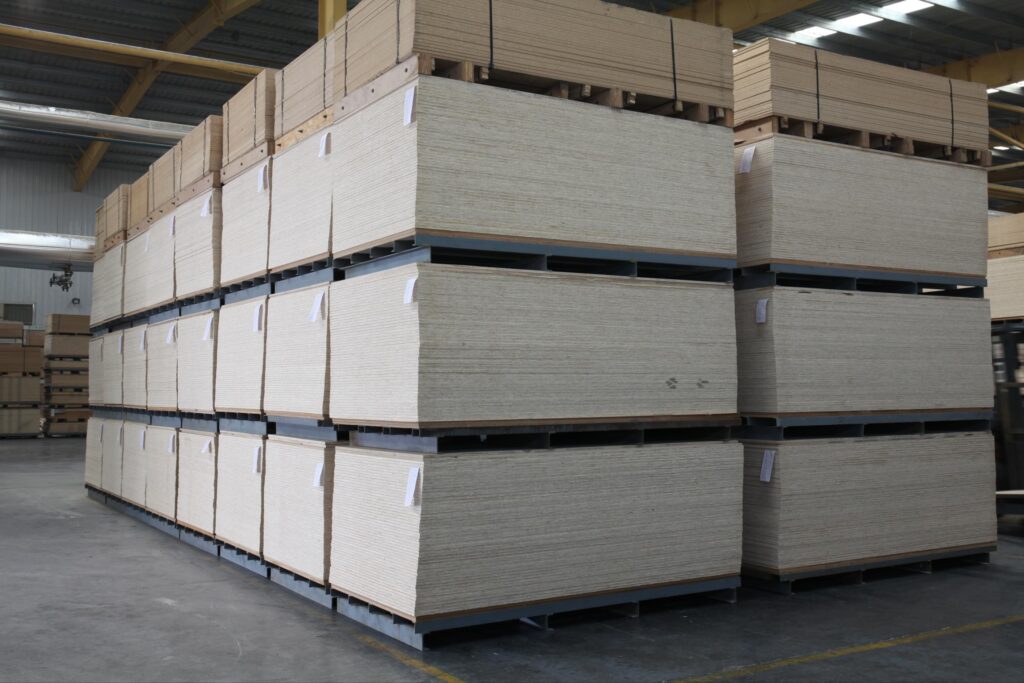
Oriented Strand Board: A Versatile and Sustainable Building Material
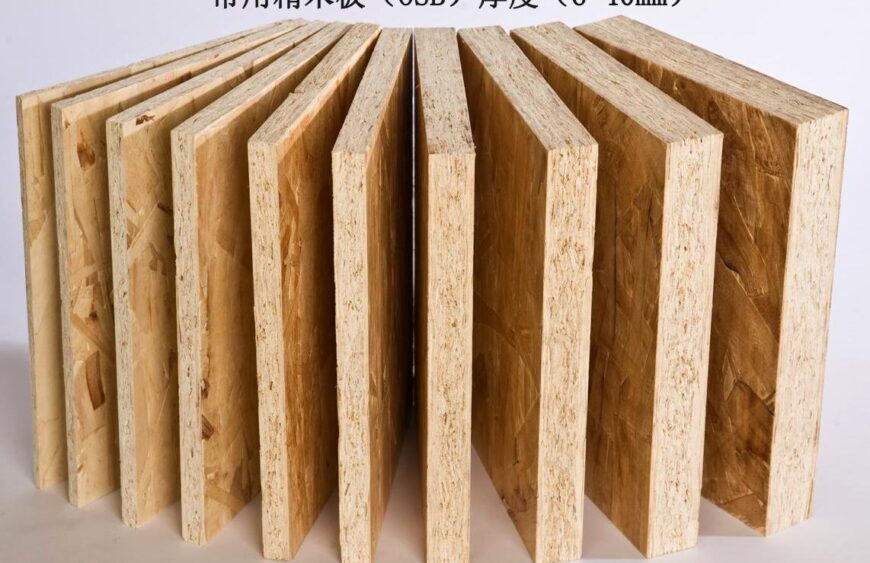
Oriented Strand Board (OSB) has emerged as a cost-effective and eco-friendly alternative to traditional plywood in the construction and furniture industries. Made from wood strands or flakes that are pressed and bonded together with adhesives, OSB boasts a unique structural composition that gives it impressive strength and durability.
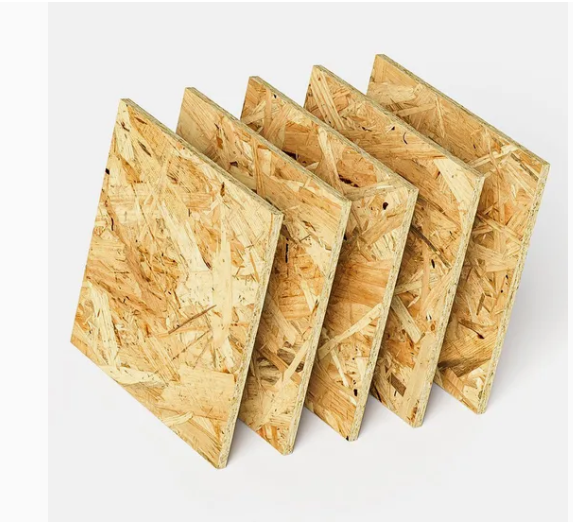
The manufacturing process of OSB begins with sorting and processing wood logs into thin, elongated strands. These strands are then dried to reduce moisture content, ensuring the stability of the final product. Next, the strands are coated with a waterproof adhesive, typically a phenol-formaldehyde resin, which enhances the board’s resistance to moisture and decay. The coated strands are oriented in specific directions—usually perpendicular to each other in multiple layers—to optimize the board’s load-bearing capacity. Finally, the layered strands are subjected to high temperature and pressure in a press machine, fusing them into a dense, rigid panel.
One of the key advantages of OSB is its exceptional structural performance. Unlike plywood, which is made from solid wood veneers, OSB’s cross-oriented strand structure provides uniform strength in both longitudinal and transverse directions. This makes it an ideal choice for load-bearing applications such as roof sheathing, wall sheathing, and floor underlayment in residential and commercial buildings. Additionally, OSB has a high strength-to-weight ratio, making it easier to transport and install compared to heavier building materials like concrete or steel.
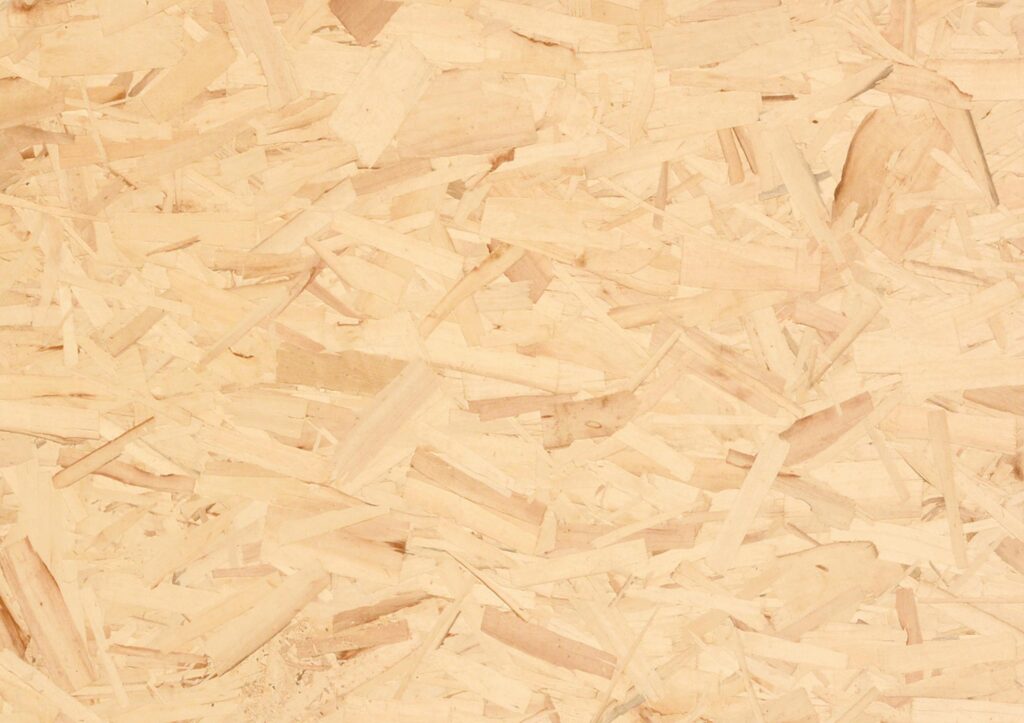
Sustainability is another major selling point of OSB. Most OSB products are manufactured using fast-growing, renewable softwood species such as pine, spruce, and fir. These trees can be replanted and harvested in a relatively short period, minimizing the environmental impact of deforestation. Moreover, OSB production utilizes almost the entire wood log, including branches and small-diameter trees that are often discarded in traditional lumber processing. This reduces wood waste and maximizes resource efficiency. In recent years, manufacturers have also developed low-formaldehyde or formaldehyde-free adhesives for OSB, further improving its environmental profile and indoor air quality compatibility.
OSB is also highly versatile in terms of application. Beyond its primary use in construction, it is widely employed in the production of furniture, packaging, and even decorative panels. Its uniform texture and consistent quality make it easy to cut, shape, and finish, allowing for customization to meet diverse design requirements. With proper surface treatment, such as painting, laminating, or veneering, OSB can be transformed into aesthetically pleasing surfaces suitable for both indoor and outdoor use.
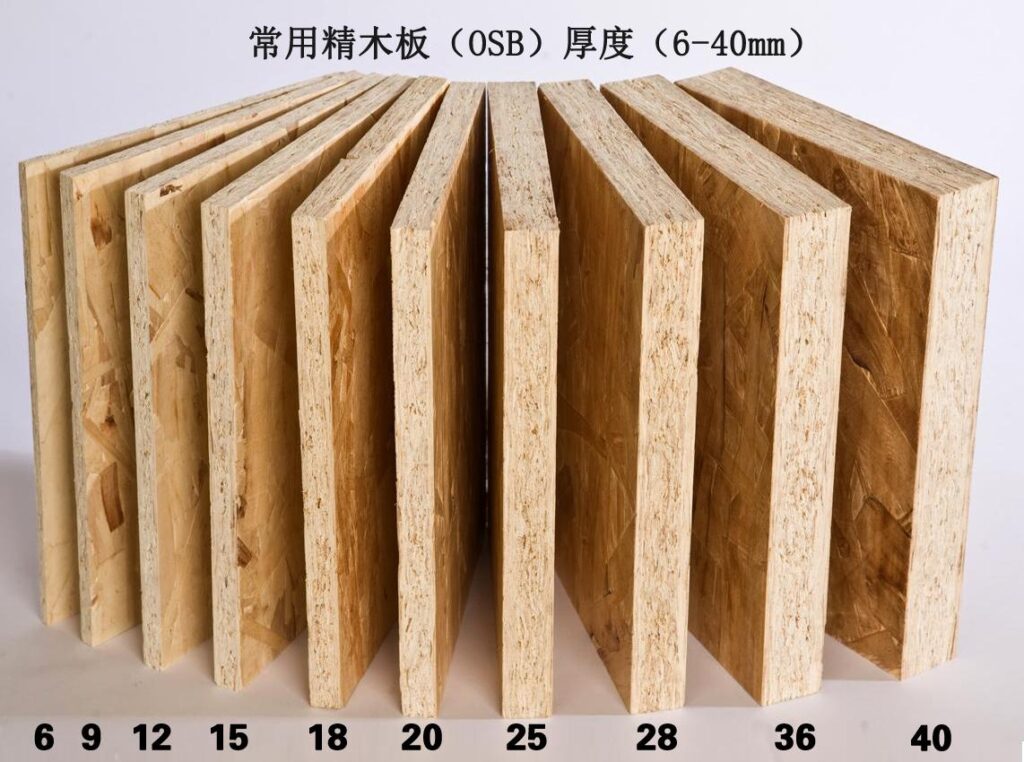
Despite its many benefits, OSB does have some limitations. It is less resistant to prolonged exposure to direct sunlight and heavy rain compared to treated lumber, so it requires proper sealing or protection when used outdoors. Additionally, OSB is not as visually appealing as natural wood, which may limit its use in applications where appearance is a top priority. However, these drawbacks are often outweighed by its affordability, strength, and sustainability.
In conclusion, oriented strand board has established itself as a reliable and sustainable building material that meets the demands of modern construction and manufacturing. Its unique structural design, cost-effectiveness, and eco-friendly attributes make it a preferred choice for architects, builders, and furniture makers alike. As the construction industry continues to prioritize sustainability and efficiency, the popularity of OSB is expected to grow even further in the years to come.