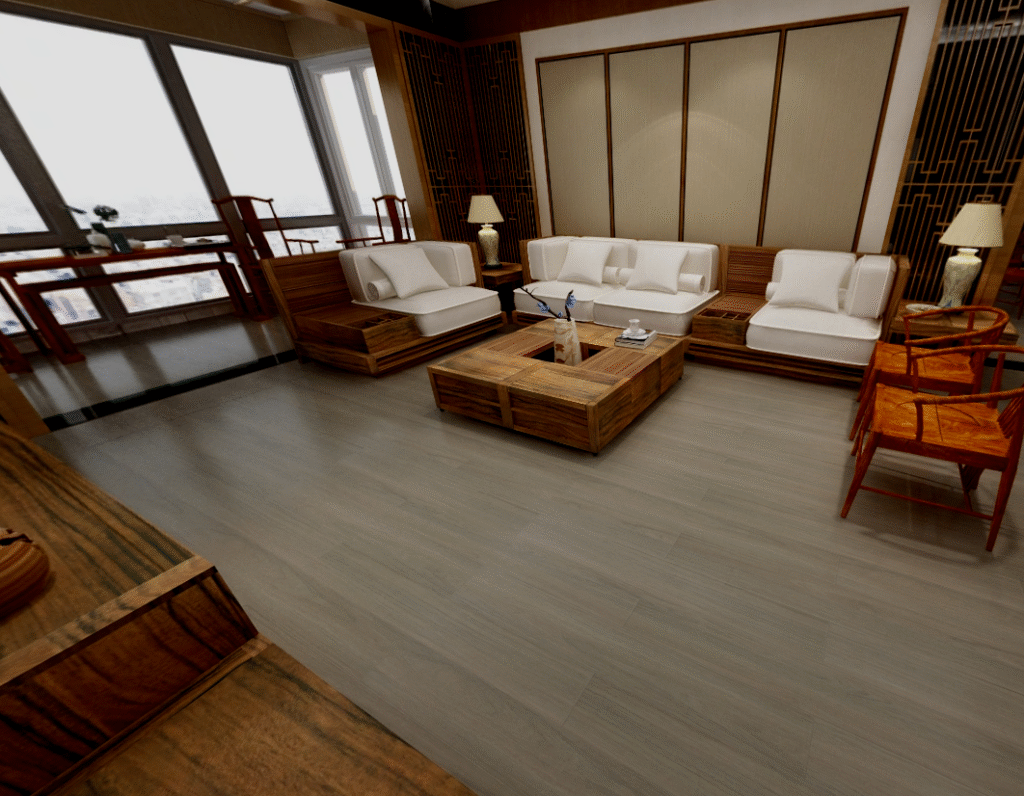
What exactly are the advantages of OSB flooring?
Introduction to OSB Flooring: Eco-friendly and Durable
Oriented Strand Board (OSB) flooring has emerged as a prominent choice in the construction and interior design industry, celebrated for its exceptional combination of environmental sustainability and robust durability. This engineered wood product, crafted from layers of wood strands oriented in specific directions, offers a unique blend of strength, eco-friendliness, and versatility that caters to the demands of modern construction and green living.
Eco-friendly Attributes of OSB Flooring
One of the most compelling features of OSB flooring is its remarkable environmental profile. OSB is typically manufactured using fast-growing, renewable wood species, such as pine or spruce, which helps reduce pressure on old-growth forests. The production process emphasizes efficiency, with minimal wood waste as the strands used are often by-products from other woodworking operations, further enhancing its sustainability credentials.
A key aspect that underscores the eco-friendliness of OSB flooring is its low formaldehyde emission levels. Many high-quality OSB products, especially those certified to standards like ENF (Emission Standard for Formaldehyde in Wood-based Panels), meet some of the strictest indoor air quality requirements. The ENF certification ensures that the formaldehyde emission is extremely low, typically below 0.025 mg/m³, making it a safe choice for homes, offices, and public spaces where indoor air quality is a priority. This low emission level not only protects the health of occupants but also reduces the environmental impact throughout the product’s lifecycle.
Moreover, OSB flooring is a highly recyclable material. At the end of its useful life, OSB can be recycled or repurposed, contributing to the circular economy and reducing waste sent to landfills. Its biodegradable nature, as a natural wood product, further minimizes its environmental footprint compared to synthetic flooring materials.
Exceptional Durability of OSB Flooring
OSB flooring is renowned for its outstanding durability, making it suitable for a wide range of applications, from residential to commercial settings. The construction of OSB, with its layers of wood strands glued together and oriented in alternating directions, creates a panel with exceptional strength and stability. This cross-oriented structure gives OSB superior resistance to warping, twisting, and shrinking, even when exposed to changes in temperature and humidity.
The density and thickness of OSB, such as 12mm panels, contribute to its load-bearing capacity. These panels can withstand heavy foot traffic, the weight of furniture, and even commercial equipment, making them ideal for areas with high usage. OSB flooring also demonstrates remarkable resistance to impacts and abrasions, maintaining its structural integrity over time with minimal maintenance.
In addition to its mechanical durability, OSB can be treated with special coatings or finishes to enhance its resistance to moisture and pests. While OSB is not inherently waterproof, proper sealing and installation in areas with controlled humidity can ensure its long-term performance. This durability makes OSB flooring a cost-effective choice, as it offers a long service life without the need for frequent replacements.
Versatility and Other Advantages
Beyond its eco-friendly and durable qualities, OSB flooring offers significant versatility. It can be used as a subfloor in construction, providing a solid base for various finish flooring materials like tiles, laminate, or carpet. Alternatively, with proper finishing, OSB can be used as a decorative flooring option itself, offering a rustic, industrial aesthetic that appeals to modern design trends.
OSB flooring is also valued for its ease of installation. The panels are available in standard sizes, making them easy to handle and install, which can save time and labor costs in construction projects. Their uniform thickness and flat surface ensure a smooth base for subsequent flooring layers, contributing to the overall quality of the finished floor.
Conclusion
OSB flooring stands out as a testament to how modern engineering can transform natural materials into a product that balances environmental responsibility with practical durability. Its use of renewable resources, low formaldehyde emissions, and recyclable nature make it an excellent choice for eco-conscious builders and homeowners. At the same time, its robust structure, high load-bearing capacity, and resistance to wear and tear ensure it meets the demands of even the most rigorous applications. As the construction industry continues to prioritize sustainability and longevity, OSB flooring is poised to play an increasingly important role in creating spaces that are both environmentally friendly and built to last.